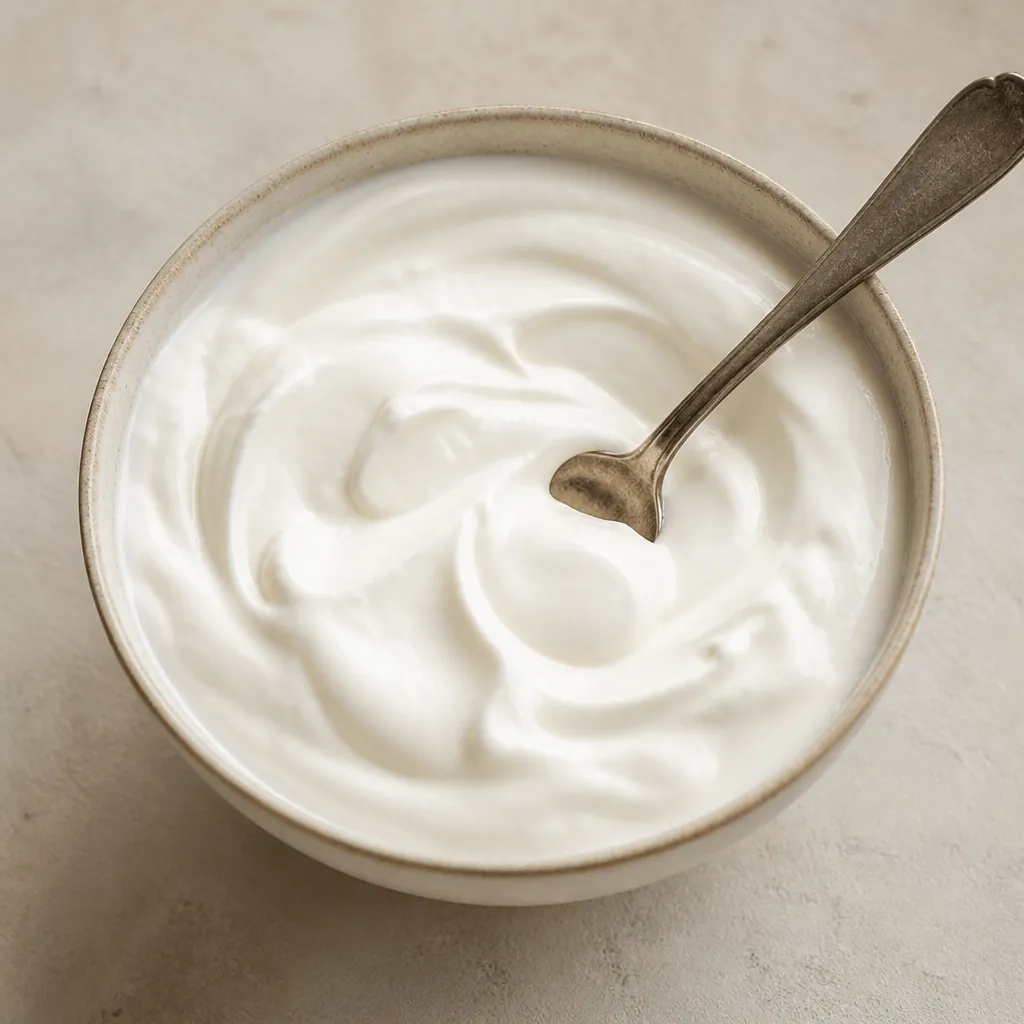
Greek yogurt is natural yogurt that's been strained to remove some of the whey, leaving it thicker, creamier and higher in protein. 'Greek-style' yogurt is thickened differently and is usually lighter.
How to buy
Choose full-fat for cooking and richness, or 0–2% fat for a lighter, high-protein option. Check it's plain and unsweetened if you want to use it in savoury dishes. 'Greek' (strained) is thicker than 'Greek-style'.
How to store
Keep refrigerated and use by the date on the pot. Once opened, use within a few days. Don't freeze plain Greek yogurt to use later as a spoonable product — it splits and goes grainy on thawing (though it's fine frozen into smoothies or bakes).
How to prepare
Bring to room temperature before stirring into hot dishes, and add it off the heat to stop it curdling. For a smoother result, stir a teaspoon of cornflour through it first to stabilise it.
How to cook
- Stir into curries and soups off the heat for creaminess without cream.
- Use as a base for marinades — the acidity tenderises chicken and lamb.
- Swap for some of the fat in bakes for a moist, tangy crumb.
- Dollop onto chilli, dahl or traybakes in place of soured cream.
Substitutes
- Natural yogurt (slightly thinner) or soured cream in many dishes.
- Crème fraîche where you want it to hold up better to heat.
What it goes with
honey, berries, cucumber, mint, garlic, curry, granola.
Nutrition (estimated)
Per 100g, full-fat plain — approximate.
97 kcal · 9 g